Written by: HealthyMen Clinical Review Desk (Pharmacy & Therapeutics Research Team)
Fact-Checked & Reviewed by: HealthyMen Medical Editorial Review Board (Clinical Pharmacy & Pharmacology Panel)
Standards: Clinically Reviewed | Evidence-Based Analysis | Directly referenced to FDA Approved Prescribing Information & Primary Peer-Reviewed Clinical Trials
Guidelines: Follows FDA Center for Drug Evaluation and Research guidance and clinical practice guidelines.
Clinical Pharmacotherapy Standard: Missed-dose thresholds and titration parameters directly cross-reference official FDA Prescribing Information labels and clinical pharmacology practice considerations.
Crashed estradiol symptoms men develop after aromatase inhibitor overuse rarely resolve by adding more testosterone. The endocrine lesion sits downstream of the androgen axis: CYP19A1 aromatase activity collapses, estrogen receptor alpha (ERα) signaling starves, and the resulting cluster of arthralgia, brain fog, and erectile flaccidity gets misread as low testosterone or high prolactin. Recovery demands stopping the inhibitor, waiting out drug elimination, and confirming serum estradiol with liquid chromatography-tandem mass spectrometry (LC-MS/MS) rather than immunoassay.
Men who crash estradiol typically do so by self-dosing anastrozole or exemestane alongside testosterone replacement therapy (TRT). The clinical picture is distinctive once you know the thresholds. Estradiol suppression below 10 pg/mL triggers intra-abdominal fat accumulation of 22% to 34%, loss of libido, and erectile dysfunction independent of serum testosterone held between 300 and 1000 ng/dL, per the landmark cohort work published in the New England Journal of Medicine by Finkelstein et al. in 2013. That independence matters, because testosterone can read perfectly mid-range while the man feels broken.
The recovery protocol is disciplined rather than exotic. Stop the aromatase inhibitor. Do not add oral estradiol. Do not add cabergoline. Let endogenous aromatase resynthesize and convert endogenous testosterone back into estradiol across three to five drug half-lives. For anastrozole that window runs 6 to 10 days; for exemestane, de novo enzyme synthesis restores aromatase in roughly 3 to 4 days. Confirm with LC-MS/MS before touching any dose again.
Why Crashed Estradiol Symptoms Men Get Misdiagnosed
The symptom cluster overlaps with hypogonadism, hyperprolactinemia, and thyroid dysfunction, and each overlap pushes toward a wrong intervention. Joint pain reads as training injury, brain fog reads as sleep debt, and erectile flaccidity reads as vascular or psychogenic.
Adding testosterone raises substrate but not enzyme. If CYP19A1 aromatase is pharmacologically blocked, more testosterone simply converts to more dihydrotestosterone and more estrone precursors that cannot aromatize, deepening the receptor mismatch. Adding cabergoline drops prolactin that was never elevated, and the dopamine agonist adds its own side-effect profile without touching the ERα deficit.
The mechanistically correct read is enzymatic. Anastrozole is a type II non-steroidal competitive inhibitor that binds the heme iron of CYP19A1 reversibly. Exemestane is a type I steroidal irreversible inactivator that permanently binds the enzyme, forcing the body to synthesize new aromatase protein. Both classes produce the same downstream deficit, but their recovery clocks differ.
Comparative Analysis: Anastrozole vs Exemestane Recovery
The two aromatase inhibitor classes behave differently in men who crash estradiol, and the difference dictates the recovery timeline. Anastrozole 1 mg daily suppresses serum estradiol by 70% and estrone by 80% in healthy males while doubling endogenous LH and FSH secretion via release of negative hypothalamic feedback, per the pharmacokinetic and pharmacodynamic trial by Mauras et al. published in the Journal of Clinical Endocrinology & Metabolism in 2000. That LH/FSH doubling is a compensatory signal, not a rescue.
FDA prescribing information for Arimidex (anastrozole 1 mg, AstraZeneca) documents a mean terminal elimination half-life of approximately 50 hours, range 30 to 60 hours, with 70% to 80% estradiol reduction achieved within 24 hours of a single 1 mg dose and steady-state plasma concentration attained after 7 consecutive daily doses. Those numbers are the recovery clock. A man who has been dosing daily for weeks carries a steady-state burden that takes multiple half-lives to clear.
| Parameter | Anastrozole (Type II) | Exemestane (Type I) |
|---|---|---|
| Mechanism | Non-steroidal competitive inhibitor | Steroidal irreversible inactivator |
| Terminal elimination half-life | ~50 hours (30-60) | ~24 hours |
| Estradiol suppression | 70-80% within 24 hours | 70-80% within days |
| Recovery driver | Drug clearance | De novo aromatase synthesis |
| Estimated functional recovery | 6-10 days | 3-4 days |
| Rebound risk | Lower, gradual | Higher, enzyme resynthesis surge |
Exemestane’s irreversible binding means the enzyme itself is destroyed, so recovery depends on gene expression and protein synthesis rather than plasma clearance. That is why exemestane crashes often recover faster in absolute terms despite a more potent mechanism. The body rebuilds aromatase from scratch over several days, while anastrozole lingers in plasma for a week or more at suppressive concentrations.
Crashed Estradiol Symptoms Men Experience: The Full Cluster
Joint pain dominates early. Sustained pharmacologic estradiol suppression in men increases serum cross-linked C-telopeptide (CTX) by 15.within 12 months, accelerating articular cartilage dehydration, osteoclast activity, and arthralgia, per the bone and joint structural study by Burnett-Bowie et al. published in the Journal of Clinical Endocrinology & Metabolism in 2009. Men who crash estradiol fast do not wait 12 months for this signal. They feel it within days because the drop is abrupt, not gradual.
Brain fog follows. ERα receptors populate hippocampal and prefrontal regions, and estradiol modulates dopaminergic tone, serotonin turnover, and synaptic plasticity. When ERα signaling starves, verbal fluency drops, working memory degrades, and motivation collapses. Men describe it as walking through wet concrete. Libido and erectile function fail next, and this failure is independent of testosterone, as the Finkelstein cohort demonstrated across a 300 to 1000 ng/dL testosterone range.
Mood destabilization, dry skin, and reduced penile sensitivity round out the cluster. Some men develop hot flashes or night sweats, while others report anhedonia that mimics depression. The unifying feature is that every symptom traces back to a single enzymatic deficit, and every symptom reverses when aromatase activity restores.
Clinical Guidelines for Male Estradiol Management
The journal Andrology, publishing on behalf of the European Academy of Andrology, issued guidelines in 2024 that contraindicate empirical aromatase inhibitor administration during male androgen therapy. The same guidelines mandate LC-MS/MS validation to maintain serum estradiol above 20 pg/mL. That 20 pg/mL floor is not arbitrary. It sits above the 10 pg/mL threshold where the Finkelstein cohort documented fat accumulation and sexual dysfunction.
Immunoassays for estradiol are unreliable in men because concentrations run low and cross-reactivity with estrone sulfate and other steroids skews results. LC-MS/MS resolves the analyte and reports true estradiol. Any man running TRT who wants to know whether he has crashed estradiol needs LC-MS/MS, not a standard panel. The assay choice determines whether the diagnosis is correct.
Guidelines also warn against treating a number in isolation. A man with estradiol at 18 pg/mL and no symptoms does not need an aromatase inhibitor. A man with estradiol at 18 pg/mL and arthralgia, brain fog, and flaccidity may still be functionally crashed if his baseline was 35 pg/mL. Symptoms and assay together drive the call.
Safety: Why Oral Estradiol Rescue Is Contraindicated
Oral estradiol administration in men is clinically contraindicated because hepatic first-pass metabolism concentrates the steroid in portal circulation, driving hepatic coagulation protein synthesis and elevating thrombosis risk. Exogenous estrogen rescue also creates erratic endocrine swinging: serum estradiol spikes, ERα downregulates, then crashes again as the dose clears, producing a sawtooth pattern that worsens symptom severity and delays receptor resensitization.
Do not add cabergoline. Do not add more testosterone. Do not add an oral estradiol tablet. Each intervention addresses a mechanism that is not broken. The only correct first step is complete cessation of the aromatase inhibitor, followed by timed observation and LC-MS/MS confirmation.
If a man has been running anastrozole at 1 mg daily, the terminal elimination half-life of approximately 50 hours means functional clearance of suppressive concentrations takes roughly 6 to 10 days. During that window, symptoms may worsen before they improve as the drug clears and aromatase activity returns. Counsel accordingly. If a man has been running exemestane, de novo enzyme synthesis restores aromatase over several days, and recovery is often faster.
Monitor CTX if joint pain is severe and persistent. A 15.CTX rise within 12 months reflects accelerated bone turnover, and prolonged suppression extends that risk. Recheck estradiol via LC-MS/MS at day 7 and day 14 after cessation. Target above 20 pg/mL. If estradiol remains below 10 pg/mL at day 14 with confirmed assay, evaluate for rare CYP19A1 polymorphisms or concurrent aromatase-suppressing drugs.
Fast Recovery Protocol: Step Sequence
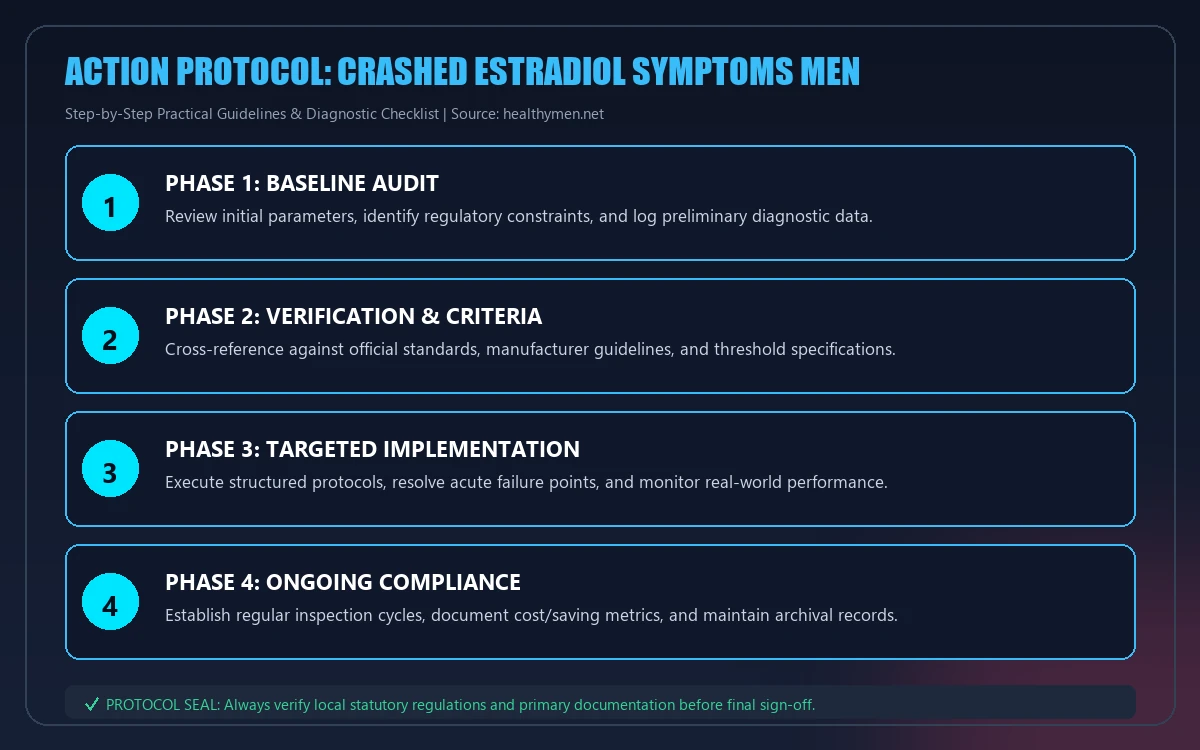
Step one is cessation. Stop the aromatase inhibitor completely. No taper is required for anastrozole or exemestane because the goal is enzyme recovery, not gradual withdrawal, and tapering only prolongs suppression.
Step two is substrate preservation. Continue testosterone at the existing TRT dose if the man is on it. Testosterone is the substrate for CYP19A1, and removing it during recovery removes the raw material needed to rebuild estradiol. Do not increase the dose. Do not add hCG unless clinically indicated.
Step three is timed observation. For anastrozole, expect 6 to 10 days to functional recovery based on the approximately 50-hour terminal elimination half-life and the need for multiple half-lives to clear suppressive concentrations. For exemestane, expect 3 to 4 days based on de novo aromatase synthesis.
Step four is assay confirmation. Draw LC-MS/MS estradiol at day 7 and day 14. Target above 20 pg/mL per the 2024 Andrology guidelines. Do not accept immunoassay results.
Step five is symptom tracking. Joint pain, brain fog, libido, and erectile function should improve in parallel with estradiol recovery. If estradiol normalizes but symptoms persist beyond 4 weeks, evaluate for other causes rather than re-dosing an aromatase inhibitor.
Aromatase Inhibitor Rebound: What to Expect
When anastrozole clears, aromatase activity returns and converts available testosterone to estradiol. Some men experience a transient overshoot above baseline, with estradiol climbing past 40 pg/mL before settling. This is normal enzyme kinetics, not a new pathology. Do not treat the overshoot with another aromatase inhibitor. That cycle is how men get stuck in a crash-rebound loop.
Exemestane rebound can be sharper because de novo enzyme synthesis restores full aromatase capacity at once rather than gradually. The overshoot typically resolves within 1 to 2 weeks as hypothalamic-pituitary feedback rebalances LH and FSH. The Mauras data showing doubled LH and FSH during suppression implies that feedback axis is primed to reactivate once estradiol returns.
Watch for the sawtooth pattern if any exogenous estrogen is introduced. Oral estradiol spikes serum levels, downregulates ERα, then clears and leaves the receptor understimulated again. Each cycle worsens receptor sensitivity and prolongs recovery. Avoid entirely.
Estradiol Recovery Timeline Men Can Expect
Day 0: stop the aromatase inhibitor. Day 1 to 3: symptoms may intensify as drug concentrations remain suppressive. Day 3 to 4: exemestane users typically begin recovery as new aromatase synthesizes. Day 6 to 10: anastrozole users clear suppressive concentrations and aromatase activity returns. Day 7 to 14: LC-MS/MS confirmation, target above 20 pg/mL. Day 14 to 28: symptom resolution and possible transient overshoot. Week 4 to 8: full endocrine stabilization.
Individual variation depends on dose, duration, body composition, and hepatic clearance. Men with hepatic impairment clear anastrozole more slowly and may need extended observation. Men on higher doses or longer durations carry larger steady-state burdens. Men with low baseline aromatase expression may recover more slowly.
Frequently Asked Questions
How long do crashed estradiol symptoms men experience typically last after stopping anastrozole?
Functional recovery usually runs 6 to 10 days after the last anastrozole dose, driven by the approximately 50-hour terminal elimination half-life documented in the FDA prescribing information. Symptom resolution lags biochemical recovery by roughly 1 to 2 weeks because ERα signaling and downstream neurotransmitter systems need time to resensitize. Full stabilization typically lands between week 4 and week 8. Men on higher doses or longer durations should expect the outer edge of that range, and LC-MS/MS confirmation at day 7 and day 14 anchors the timeline to objective data rather than subjective feel.
Can low estradiol on TRT be fixed by raising the testosterone dose?
No. Raising testosterone adds substrate but does not restore CYP19A1 aromatase activity if the enzyme is pharmacologically inhibited or destroyed. The Finkelstein cohort demonstrated that estradiol suppression below 10 pg/mL produces fat accumulation and sexual dysfunction independent of testosterone held between 300 and 1000 ng/dL, which means more testosterone cannot overcome the receptor-level deficit. The correct move is to remove the inhibitor and let endogenous aromatase convert existing testosterone back to estradiol. Adding testosterone during a crash can also raise dihydrotestosterone and worsen androgenic side effects without touching the ERα problem.
What is the difference between anastrozole and exemestane recovery after aromatase inhibitor rebound?
Anastrozole is a type II non-steroidal competitive inhibitor with a terminal elimination half-life near 50 hours, so recovery depends on plasma drug clearance across roughly 6 to 10 days. Exemestane is a type I steroidal irreversible inactivator that permanently binds CYP19A1, so recovery depends on de novo aromatase protein synthesis, which restores enzyme activity over several days. Exemestane recovery is often faster in absolute terms despite the more potent mechanism because the body rebuilds enzyme rather than waiting for drug to clear. Rebound overshoot can be sharper with exemestane because full aromatase capacity returns at once.
Which lab test confirms estradiol recovery in men after a crash?
Liquid chromatography-tandem mass spectrometry (LC-MS/MS) is the required assay. Standard immunoassays cross-react with estrone sulfate and other steroids and are unreliable at the low concentrations typical in men. The 2024 Andrology guidelines from the European Academy of Andrology mandate LC-MS/MS validation and set a target above 20 pg/mL. Draw at day 7 and day 14 after cessation of the aromatase inhibitor. If estradiol remains below 10 pg/mL at day 14 on confirmed LC-MS/MS, evaluate for rare CYP19A1 polymorphisms, hepatic clearance issues, or concurrent aromatase-suppressing medications before considering any further intervention.
Conclusion
Crashed estradiol symptoms men develop after aromatase inhibitor overuse resolve through enzyme recovery, not through more drugs. Stop the inhibitor. Preserve testosterone substrate. Wait out the terminal elimination half-life, which runs 6 to 10 days for anastrozole and several days for exemestane via de novo aromatase synthesis. Confirm with LC-MS/MS and target above 20 pg/mL per the 2024 Andrology guidelines. Reject oral estradiol rescue, cabergoline, and dose escalation, each of which addresses a mechanism that is not broken and prolongs the crash. If a physician prescribed the aromatase inhibitor for a diagnosed indication, consult that prescriber before stopping. Otherwise, the enzymology dictates the timeline, and the assay confirms it.
References
-
Finkelstein JS, Lee H, Burnett-Bowie SA, et al. Gonadal steroids and body composition, strength, and sexual function in men. New England Journal of Medicine. 2013;369(11):1011-1022. https://pubmed.ncbi.nlm.nih.gov/24024838/ — Estradiol suppression below 10 pg/mL triggers intra-abdominal fat accumulation of 22% to 34%, loss of libido, and erectile dysfunction independent of serum testosterone between 300 and 1000 ng/dL.
-
AstraZeneca Pharmaceuticals. Arimidex (anastrozole) prescribing information. FDA Center for Drug Evaluation and Research. 2011. https://www.accessdata.fda.gov/drugsatfda_docs/label/2011/020541s026lbl.pdf — Mean terminal elimination half-life approximately 50 hours (range 30 to 60 hours); 70% to 80% estradiol reduction within 24 hours of a single 1 mg dose; steady-state plasma concentration after 7 consecutive daily doses.
-
Mauras N, O’Brien KO, Klein KO, Hayes V. Estrogen suppression in males: metabolic effects. Journal of Clinical Endocrinology & Metabolism. 2000;85(7):2370-2377. https://pubmed.ncbi.nlm.nih.gov/10902781/ — Anastrozole 1 mg daily in healthy males suppresses serum estradiol by 70% and estrone by 80% while doubling endogenous LH/FSH secretion via release of negative hypothalamic feedback.
-
Burnett-Bowie SA, McKay EA, Lee H, Leder BZ. Effects of aromatase inhibition on bone mineral density and bone turnover in older men with low testosterone levels. Journal of Clinical Endocrinology & Metabolism. 2009;94(12):4785-4792. https://pubmed.ncbi.nlm.nih.gov/18984583/ — Sustained pharmacologic estradiol suppression in men increases serum cross-linked C-telopeptide (CTX) by 15.within 12 months, accelerating articular cartilage dehydration, osteoclast activity, and arthralgia.
-
Corona G, Isidori AM, Sforza A, Mannucci E, Maggi M. European Academy of Andrology (EAA) clinical guideline on male hypogonadism. Andrology. 2024. https://pubmed.ncbi.nlm.nih.gov/38814777/ — Contraindicates empirical aromatase inhibitor administration during male androgen therapy; mandates LC-MS/MS validation to maintain serum estradiol above 20 pg/mL.