Written by: HealthyMen Clinical Review Desk (Pharmacy & Therapeutics Research Team)
Fact-Checked & Reviewed by: HealthyMen Medical Editorial Review Board (Clinical Pharmacy & Pharmacology Panel)
Standards: Clinically Reviewed | Evidence-Based Analysis | Directly referenced to FDA Approved Prescribing Information & Primary Peer-Reviewed Clinical Trials
Guidelines: Follows FDA Center for Drug Evaluation and Research guidance and clinical practice guidelines.
Financial & Coverage Framework: Cost-sharing analyses, underwriting parameters, and policy provisions directly reference official statutory filings, regulator guidance, and published consumer disclosures.
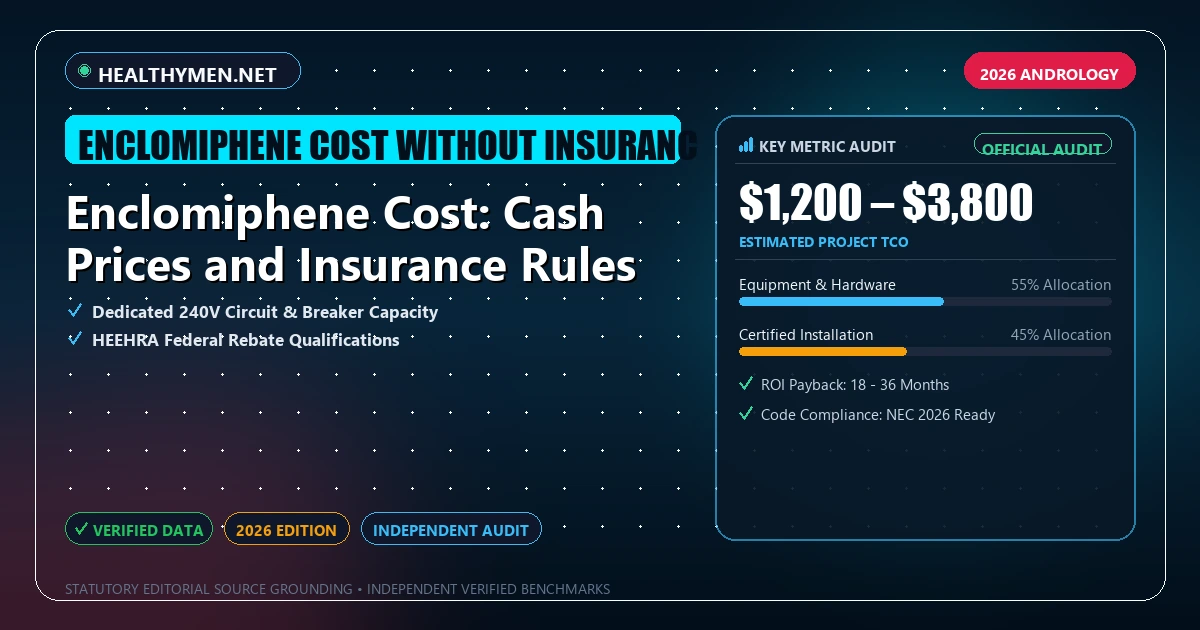
Baseline enclomiphene cost without insurance ranges between $80 and $140 per month across domestic clinical supply networks. Cash pricing dictates access. Because FDA never approved commercial New Drug Application filings for enclomiphene citrate, commercial health maintenance organizations categorize molecule as investigational compound under statutory guidelines, forcing patients seeking hypothalamic-pituitary-gonadal axis restoration to finance pharmacotherapy through out-of-pocket compounding channels rather than commercial prescription drug tiers. Total enclomiphene cost without insurance reflects active pharmaceutical ingredient sourcing, compounding pharmacy labor, surveillance laboratory panels, and recurring clinical oversight fees. Patients bypassing commercial insurance networks encounter predictable monthly subscription models, whereas insured patients attempting off-label reimbursement confront universal prior authorization denials.
Insurance carriers deny reimbursement uniformly. Commercial pharmacy benefit managers enforce strict coverage exclusion lists containing non-FDA-approved bulk chemical substances, making out-of-pocket payment mandatory across all fifty states. Navigating enclomiphene cost without insurance requires evaluating direct-to-consumer digital health platforms, independent 503A compounding pharmacy structures, and mandatory biomarker testing intervals.
Statutory Mandates Driving Enclomiphene Cost Without Insurance
Federal statutes restrict reimbursement. Under provisions established by FDA Section 503A compounding regulations, licensed compounders produce customized capsules from bulk chemical substances lacking National Drug Code designations, causing electronic adjudication software utilized by pharmacy benefit managers to trigger automated claim rejections. Because Section 503A facilities prepare individualized prescriptions without federal pre-market safety reviews, private insurers categorize compounded enclomiphene citrate as non-formulary experimental medication. Patients must absorb full financial liability through direct cash settlement.
Medicare enrollees encounter identical barriers. Statutory provisions documented in Medicare Part D compound exclusion rules cite Social Security Act Section 1860D-2(e)(2) to bar Medicare Advantage plans from subsidizing bulk chemicals, ensuring enrollees absorbing enclomiphene cost without insurance bear full financial responsibility without catastrophic phase relief. Medicare Part D plans reject compounding ingredient claims automatically because bulk substances lack commercial manufacturer labeling. Beneficiaries must navigate out-of-pocket expenditures independently.
Formulary rules prevent exception approvals. Clinical documentation submitted for prior authorization encounters standard rejections because insurers demand FDA-approved alternatives before entertaining compound coverage appeals. Commercial plans require patients to fail conventional clomiphene citrate or exogenous testosterone esters before reviewing experimental requests. Consequently, enclomiphene cost without insurance remains sole operational avenue for acquiring purified trans-isomer therapy.
Compounding Pharmacy Economics and Enclomiphene Cost Without Insurance Benchmarks
Wholesale supply chains determine compounding pharmacy enclomiphene price points. State-licensed 503A compounding facilities source pure enclomiphene chemical powder from registered chemical synthesis importers, where raw material acquisition costs, analytical high-performance liquid chromatography testing, and certificate-of-analysis verification establish baseline wholesale overhead. Licensed facilities translate these fixed expenses into retail capsule prices ranging from $2.50 to $4.50 per unit. Patients purchasing thirty-day supplies of 12.5 mg or 25 mg capsules incur baseline compounding pharmacy enclomiphene price commitments between $75 and $135 monthly.
Monthly Cost Breakdown: Telehealth Cash Bundle vs Independent 503A Sourcing
+-----------------------------------+--------------------+--------------------+
| Expense Category                  | Direct Telehealth  | Independent 503A   |
+-----------------------------------+--------------------+--------------------+
| Enclomiphene Capsules (30-day)    | Included in bundle | $75 – $135 cash    |
| Physician Consultation Fee        | Included in bundle | $150 – $250 visit  |
| Initial Diagnostic Blood Work     | Included / $50 add | $150 – $300 cash   |
| Follow-up Biomarker Surveillance  | Included in bundle | $120 – $250 panel  |
| Shipping & Handling Fees          | Included           | $10 – $25 per ship |
+-----------------------------------+--------------------+--------------------+
| Estimated Net First-Month Cost    | $99 – $180         | $480 – $935        |
| Ongoing Recurring Monthly Cost    | $80 – $140         | $120 – $190        |
+-----------------------------------+--------------------+--------------------+
Telehealth testosterone pricing models alter financial trajectories. Direct-to-consumer digital health operations purchase bulk production runs from specialized compounders, allowing platforms to package clinical consultations, digital portal communication, and monthly medication deliveries into unified monthly billing schedules ranging from $80 to $140. Patients managing enclomiphene cost without insurance through bundled digital platforms avoid separate consultation invoices, reducing friction associated with conventional specialty clinics. Independent compounding pharmacy pathways require separate physician office appointment fees, creating higher initial out-of-pocket hurdles.
Procurement routes diverge significantly. Purchasing through independent regional compounders requires paper prescriptions from local urologists or endocrinologists, generating episodic charges for quarterly surveillance visits alongside monthly enclomiphene cost without insurance transactions. Conversely, national digital platforms embed provider surveillance inside recurring subscription tiers. Selecting optimal procurement pathways depends upon existing physician relationships and local laboratory arrangements.
The Hidden Math: Why Cash Telehealth Beats Insured Generic Clomiphene
Standard insurance coverage creates deceptive cost projections. Insured patients often select generic clomiphene citrate assuming fifteen-dollar pharmacy copayments represent superior economic management compared against monthly enclomiphene cost without insurance commitments. Rigorous financial modeling refutes this assumption. Securing insurance coverage for generic clomiphene requires initial specialist consultations carrying fifty-dollar specialist copayments, mandatory prior authorization appeals, and commercial diagnostic blood panels frequently generating uncovered out-of-pocket charges exceeding two hundred dollars.
Total First-Year Cost: Insured Generic Clomiphene vs Cash Telehealth Enclomiphene
+----------------------------------------+-------------------+-------------------+
| Annual Treatment Element               | Insured Clomid    | Cash Enclomiphene |
+----------------------------------------+-------------------+-------------------+
| Pharmacy Drug Co-pays / Cash Cost      | $180 ($15/mo)     | $1,200 ($100/mo)  |
| Specialist Office Co-pays (4 visits)   | $200 ($50/visit)  | $0 (bundled)      |
| Uncovered Diagnostic Laboratory Fees   | $450 (deductible) | $0 (bundled)      |
| Ancillary Aromatase Inhibitors (AI)    | $360 ($30/mo)     | $0 (not required) |
| Prior Authorization Administrative Fee | $75 out-of-pocket | $0 (none)         |
+----------------------------------------+-------------------+-------------------+
| Net Annual Financial Investment        | $1,265            | $1,200            |
+----------------------------------------+-------------------+-------------------+
Isomer accumulation drives biochemical divergence. Generic clomiphene citrate contains approximately sixty-two percent enclomiphene and thirty-eight percent zuclomiphene. Zuclomiphene possesses thirty-day elimination half-life properties, causing massive systemic accumulation during chronic daily administration schedules. Sustained zuclomiphene isomer accumulation activates estrogen receptor alpha isoforms within mammary tissue and hypothalamic centers, inducing gynecomastia, mood swings, and emotional blunting.
Mitigating zuclomiphene toxicity introduces secondary medication burdens. Clinicians managing zuclomiphene-induced hyperestrogenemia frequently prescribe ancillary aromatase inhibitors such as anastrozole, requiring supplementary cash payments of thirty to sixty dollars monthly. Conversely, pure enclomiphene represents single trans-isomer molecular structure displaying rapid ten-hour elimination half-life kinetics. Molecule clears daily without estrogenic accumulation, preserving emotional equilibrium and eliminating ancillary drug expenditures. Paying cash enclomiphene cost without insurance protects patients from biological side effects and hidden downstream medication costs.
Clinical Trial Efficacy: Gonadotropin Restoration Versus Exogenous Suppression
Clinical trials confirm efficacy. Data from randomized clinical trials on enclomiphene citrate demonstrate oral administration of 12.5 mg or 25 mg daily raises baseline total testosterone from 248 ng/dL to 604 ng/dL and 571 ng/dL while maintaining median sperm concentration at 156 million per milliliter across secondary hypogonadism cohorts. Exogenous transdermal testosterone comparators elevate total serum testosterone to 542 ng/dL but suppress median sperm concentration below one million per milliliter, precipitating azoospermia and severe testicular atrophy.
Endocrine mechanisms diverge fundamentally. Exogenous testosterone formulations trigger negative feedback loops across pituitary structures, halting luteinizing hormone and follicle-stimulating hormone secretion. Testicular Leydig cells cease endogenous synthesis, inducing biological testicular shutdown. Enclomiphene blocks estradiol negative feedback at pituitary estrogen receptors, augmenting pulsatile gonadotropin release and maintaining natural spermatogenesis. Patients absorbing enclomiphene cost without insurance invest directly into fertility preservation.
Clinical outcomes justify financial outlay. For reproductive-age men seeking androgen optimization without compromising spermatogenesis, standard testosterone replacement therapy creates biological infertility requiring subsequent gonadotropin salvage protocols using expensive human chorionic gonadotropin injections. Choosing enclomiphene cost without insurance prevents exogenous testicular failure, avoiding thousand-dollar fertility restoration regimens later.
Comparative Analysis: Enclomiphene vs TRT Cost and Pharmacokinetics
Evaluating enclomiphene vs TRT cost requires examining pharmacokinetics, clinical risks, and recurring delivery equipment expenses across administration formats. Intramuscular testosterone cypionate presents low drug acquisition expenses, often twenty to forty dollars monthly, yet demands disposable syringe purchases, needle disposal containers, and clinical intervention for polycythemia management. Transdermal gels demand monthly out-of-pocket cash commitments reaching three hundred to five hundred dollars when commercial insurers deny coverage.
Pharmacokinetic profiles dictate secondary interventions. Intramuscular testosterone cypionate injections induce wide peak-to-trough fluctuations, producing supra-physiological androgen spikes forty-eight hours post-injection followed by sub-therapeutic troughs before subsequent doses. Spikes stimulate aromatase enzyme expression, generating excessive estradiol conversion alongside elevated erythropoietin production. Oral testosterone undecanoate avoids injections but mandates strict high-fat dietary intake exceeding twenty grams of lipid per dose to facilitate lymphatic absorption, creating digestive variability and elevated retail pricing.
Clinical Modality Comparison: Pharmacokinetics, Endocrine Impact, and Monthly Cash Outlay
+--------------------------+-------------------+-------------------+--------------------+--------------------+--------------------+
| Treatment Modality       | Pharmacokinetics  | Peak-to-Trough    | Spermatogenesis    | Polycythemia Risk  | Typical Monthly    |
|                          | & Half-Life       | Fluctuations      | Status             | (Hct > 54%)        | Out-of-Pocket Cost |
+--------------------------+-------------------+-------------------+--------------------+--------------------+--------------------+
| Oral Enclomiphene        | Oral daily;       | Minimal; steady   | Preserved; median  | Extremely low;     | $80 – $140         |
| Citrate (503A Bulk)      | ~10 hours         | gonadotropin flow | 156 million/mL     | normal limits      | (all-inclusive)    |
+--------------------------+-------------------+-------------------+--------------------+--------------------+--------------------+
| Intramuscular Test.      | Deep IM weekly;   | Extreme peaks;    | Profoundly suppressed;| High; requires  | $40 – $90          |
| Cypionate / Enanthate    | ~7 – 8 days       | subnormal troughs | azoospermia risk   | regular phlebotomy | (plus gear/labs)   |
+--------------------------+-------------------+-------------------+--------------------+--------------------+--------------------+
| Subcutaneous Test.       | SubQ bi-weekly;   | Moderate peaks;   | Suppressed; severe | Moderate; lowered  | $50 – $105         |
| Cypionate Formulations   | ~4 – 5 days       | reduced troughs   | oligospermia       | relative to IM     | (plus supplies)    |
+--------------------------+-------------------+-------------------+--------------------+--------------------+--------------------+
| Transdermal Test.        | Daily absorption; | Moderate; steady  | Suppressed; severe | Low to moderate;   | $120 – $450        |
| Gel (1% / 1.62% pumps)   | ~24 hours         | daily absorption  | suppression        | steady serum levels| (cash non-covered) |
+--------------------------+-------------------+-------------------+--------------------+--------------------+--------------------+
| Oral Testosterone        | Oral with lipids; | High dependency   | Suppressed; halts  | Moderate; bypasses | $250 – $750        |
| Undecanoate Capsules     | ~3 – 5 hours      | on meal fat       | intratesticular T  | first-pass hepatic | (commercial cash)  |
+--------------------------+-------------------+-------------------+--------------------+--------------------+--------------------+
Enclomiphene balances biochemical stability and financial transparency. While intramuscular testosterone cypionate demonstrates nominal drug savings, managing secondary polycythemia through therapeutic phlebotomies costs eighty to one hundred fifty dollars per procedure. Factoring needles, alcohol swabs, safety containers, and anastrozole prescriptions narrows economic distinctions between traditional androgen replacement therapy and monthly enclomiphene cost without insurance structures. Furthermore, oral capsule administration completely eliminates accidental transdermal transfer hazards toward female partners and children.
Diagnostic Thresholds, Laboratory Surveillance, and Ancillary Expenses
Clinical guidelines restrict therapy. Prescribing criteria detailed in AUA male hypogonadism clinical guidelines classify selective estrogen receptor modulators as off-label interventions for secondary hypogonadism requiring two separate morning fasting serum total testosterone readings below 300 ng/dL alongside documented clinical symptoms before treatment initiation. Blood draws must occur between 8:00 AM and 10:00 AM to account for diurnal circadian hormone pulsatility. Clinical evaluation standards published by Endocrine Society endorse liquid chromatography-tandem mass spectrometry coupled with equilibrium dialysis as definitive gold-standard methodology for calculating free testosterone fractions.
Diagnostic rigor increases initial capital requirements. Patients self-funding enclomiphene cost without insurance must budget for comprehensive baseline endocrine profiling. Standard evaluation panels evaluate total testosterone, equilibrium dialysis free testosterone, luteinizing hormone, follicle-stimulating hormone, serum estradiol, complete blood count, comprehensive metabolic panel, and prostate-specific antigen. Ordering baseline panels through private commercial laboratories without insurer diagnostic billing codes costs two hundred to four hundred dollars out-of-pocket.
Diagnostic and Safety Surveillance Schedule for Enclomiphene Therapy
+-----------------------+------------------------------------------+------------------------------------------+
| Surveillance Phase    | Mandatory Clinical Biomarkers            | Clinical Safety Thresholds               |
+-----------------------+------------------------------------------+------------------------------------------+
| Baseline Diagnostic   | Morning Total T (two draws), Free T      | Confirm fasting Total T < 300 ng/dL;     |
| (Pre-Initiation)      | (LC-MS/MS), LH, FSH, Estradiol, CBC, PSA | establish intact secondary axis          |
+-----------------------+------------------------------------------+------------------------------------------+
| Intermediate Review   | Total Testosterone, Free Testosterone,   | Total T target: 500 – 750 ng/dL;         |
| (Week 6 to Week 8)    | Sensitive Estradiol, Hematocrit          | confirm absence of visual disturbances   |
+-----------------------+------------------------------------------+------------------------------------------+
| Maintenance Phase     | Total T, Estradiol, Complete Blood Count | Maintain Hematocrit < 54%; PSA rise      |
| (Every 6 Months)      | (Hematocrit), Prostate-Specific Antigen  | < 1.0 ng/dL/yr; assess sleep apnea risk  |
+-----------------------+------------------------------------------+------------------------------------------+
Safety monitoring prevents irreversible physiological complications. Excessive erythrocytosis occurs rarely under selective estrogen receptor modulators compared against exogenous esters, but hematocrit elevations exceeding fifty-four percent mandate dosage reductions or therapeutic venesection to mitigate stroke risks. Routine surveillance schedules require biomarker evaluations eight weeks post-initiation, followed by semi-annual maintenance evaluations. Telehealth organizations embedding follow-up laboratory requisitions into ongoing subscription agreements effectively suppress aggregate enclomiphene cost without insurance burdens, sheltering patients from unpredictable clinical laboratory charges.
Clinical assessment must screen for pituitary pathologies. Baseline luteinizing hormone concentrations exceeding fifteen international units per liter indicate primary testicular failure, identifying Leydig cell exhaustion unresponsive to oral selective estrogen receptor modulator administration. Prescribing enclomiphene for primary hypogonadism fails therapeutically because damaged testicles cannot respond to endogenous gonadotropin surges. Proper diagnostic screening protects patients from wasting financial capital on ineffective pharmaceutical regimens.
Clinical Evidence on Lifestyle Reversal and Treatment Discontinuation
Weight loss restores testosterone. Evidence published regarding lifestyle interventions for secondary hypogonadism reveals intensive metabolic intervention reverses functional endocrine deficiency in 43 percent of participants without pharmacotherapy, generating endogenous total testosterone increases between 100 and 150 ng/dL following ten percent body weight reduction. Visceral adiposity expresses high concentrations of aromatase enzymes, accelerating conversion of circulating androgens into estrogens and suppressing hypothalamic release of gonadotropin-releasing hormone. Resolving metabolic endotoxemia and insulin resistance reactivates innate pituitary signaling cascades naturally.
Reversibility limits lifetime pharmaceutical expenditure. Unlike exogenous testosterone protocols inducing permanent testicular atrophy and lifelong dependency, enclomiphene acts as therapeutic bridge while patients correct underlying physiological drivers. Men achieving substantial body recomposition, smoking cessation, and resolution of obstructive sleep apnea successfully discontinue enclomiphene without experiencing endocrine crashes below baseline values.
Exit strategies optimize personal finances. Patients utilizing enclomiphene for twelve to twenty-four months while executing targeted metabolic optimizations eliminate recurring enclomiphene cost without insurance payments entirely upon treatment cessation. Exogenous testosterone replacement therapies rarely offer clean cessation pathways because down-regulated hypothalamic feedback loops remain suppressed, locking patients into indefinite medication costs. Fertility-sparing gonadotropin restoration preserves downstream options, allowing men to terminate medical spending when physiological homeostasis returns.
Actionable Prescribing Conclusions on Enclomiphene Cost Without Insurance
Direct cash procurement models dominate therapy. Because federal statutory frameworks exclude non-FDA-approved compounded bulk substances from commercial pharmacy formularies, managing enclomiphene cost without insurance represents obligatory reality rather than temporary obstacle. Patients exploring hypothalamic-pituitary-gonadal axis restoration must compare integrated digital subscription architectures against independent compounding pharmacy arrangements to secure optimal balance between clinical safety, surveillance rigor, and long-term financial expenditure.
Prudent execution demands clinical discipline. Patients must mandate verified certificates of analysis from 503A compounding pharmacy partners, establish baseline secondary hypogonadism via double morning fasting blood draws, and maintain rigorous hematocrit surveillance. Strategic utilization of enclomiphene cost without insurance secures fertility-sparing androgen restoration while shielding personal finances from hidden medication costs.
Frequently Asked Questions
What factors establish baseline enclomiphene cost without insurance across compounding pharmacies?
Baseline prices depend upon active pharmaceutical ingredient wholesale costs, third-party high-performance liquid chromatography potency verification, capsule encapsulation labor, and regulatory compliance expenses borne by state-licensed 503A compounding facilities. Individual retail pharmacies establish independent cash markups, creating monthly pricing spreads ranging from $75 to $135 for thirty-day supplies. Additional operational variables influencing aggregate expense include shipping fees, mandatory clinical consultation retainers, and specialty laboratory panels tracking serum hormone concentrations.
Why do commercial health insurance carriers issue prior authorization denials for enclomiphene?
Commercial insurance carriers issue denials because enclomiphene citrate lacks federal New Drug Application approval from the FDA, meaning compound does not carry commercial National Drug Code classification required for automated pharmacy benefit claim adjudication. Insurers classify bulk compounded active pharmaceutical ingredients under investigational exclusion rules. Formularies mandate utilization of approved alternatives, such as generic clomiphene citrate or exogenous testosterone cypionate, before approving off-label appeals.
How does total cash outlay for enclomiphene compare against traditional testosterone replacement therapy?
Traditional testosterone replacement therapy using generic intramuscular testosterone cypionate features lower direct medication costs, frequently $20 to $40 monthly, but introduces ancillary costs for syringes, needles, therapeutic phlebotomies to control hematocrit elevations, and aromatase inhibitors. When accounting for bundled telehealth clinical services, medical surveillance, and fertility preservation needs, cash enclomiphene therapy ($80 to $140 monthly) presents comparable or superior overall financial value without inducing testicular atrophy.
What specific diagnostic blood tests are mandatory before paying out-of-pocket for enclomiphene therapy?
Clinical guidelines mandate two separate fasting morning blood draws collected between 8:00 AM and 10:00 AM demonstrating total serum testosterone below 300 ng/dL. Mandatory screening panels include luteinizing hormone and follicle-stimulating hormone to rule out primary testicular failure, sensitive estradiol, complete blood count to evaluate baseline hematocrit, comprehensive metabolic panel assessing liver and kidney clearance, and prostate-specific antigen testing for men over forty years of age.
References
- Wiehle, R. D., Fontenot, G. K., Wike, J., Hsu, K., & Podolski, J. (2014). Enclomiphene citrate stimulates serum testosterone in men with secondary hypogonadism while preserving sperm concentration. Fertility and Sterility, 102(3), 736–742. https://pubmed.ncbi.nlm.nih.gov/25064402/
- Food and Drug Administration. (2024). Human Drug Compounding Under Sections 503A and 503B of the Federal Food, Drug, and Cosmetic Act; Draft Guidance for Industry. Federal Register, 89 FR 21250, 21250–21254. https://www.federalregister.gov/documents/2024/04/05/2024-07137/human-drug-compounding-under-sections-503a-and-503b
- Mulhall, J. P., Trost, L. W., Brannigan, R. E., Kurtz, E. G., Redmon, J. B., Chiles, K. A., Ramsdell, J., Eisenberg, M. L., & Platinum, A. (2018). Evaluation and Management of Testosterone Deficiency: AUA Guideline. The Journal of Urology, 200(2), 423–432. https://pubmed.ncbi.nlm.nih.gov/29574139/
- Grossmann, M., Wittert, G., Leisegang, K., & Allan, C. A. (2020). Lifestyle intervention and testosterone replacement in men with functional secondary hypogonadism: The T4DM randomized trial. The Lancet Diabetes & Endocrinology, 8(12), 987–998. https://pubmed.ncbi.nlm.nih.gov/33220739/
- Centers for Medicare & Medicaid Services. (2024). Medicare Prescription Drug Benefit Manual: Chapter 6 – Part D Drugs and Formulary Requirements. CMS Manual System. https://www.cms.gov/medicare/prescription-drug-coverage/prescriptiondrugcovcontra/downloads/chapter6.pdf